Fall 2026 Newsletter
The prequel to South on Summit is in process with the first third of the novel in draft form. It is my hope to have it launched late in 2027 in time for the holidays. The research for this novel has been more intense as it begins with the end of the Gilded Age and moves through many historical events leading to the crash of 1929. I chose to use a similar format that readers enjoyed with South, using three main characters, each telling their overlapping stories. Part I is the story of Mary Crites, my great grandmother who is the first born of an Irish couple who immigrated to America from Dublin. Her tragic story unfolds as she loses her father to the Civil War, along with her mother and brother to diseases prevalent in those times. Her story is one of personal strength and continuous fight to bring the status of women to the forefront of American life.
Part II is told by Rosa Gruber, a Swiss immigrant who leaves her native Wilderswil to come to America. Raised on a small farm at the base of the Alps, she joined thousands of Swiss looking for better times in America. Many of her siblings stayed and were swept up in the events of World War I. Rosa will eventually meet another Swiss, Christian, and give birth to three children on the Summit. She will make a dangerous trip back to her homeland during the war years.
The final section of the novel features Rory, a young man who lies about his age to join the famous Scottish Black Watch Regiment of World War One. Loosely based on an actual enrollment of a fourteen year old who tricks recruiters and joins the fight. His story will be one of war, romance and infamous spy rings that exist on both sides of the engaged armies. Switzerland will serve as the central hub for spies who carry on the most sophisticated and extensive network of intelligence gathering ever established in war time.
Other Special Features of the Prequel to South on Summit
The Hunger for Education
After the close of the Civil War and the ongoing industrialization of America, people in rural and small-town areas wanted access to educational opportunities that those who lived in cities enjoyed. The town of Smithville responded to this need in two major ways:
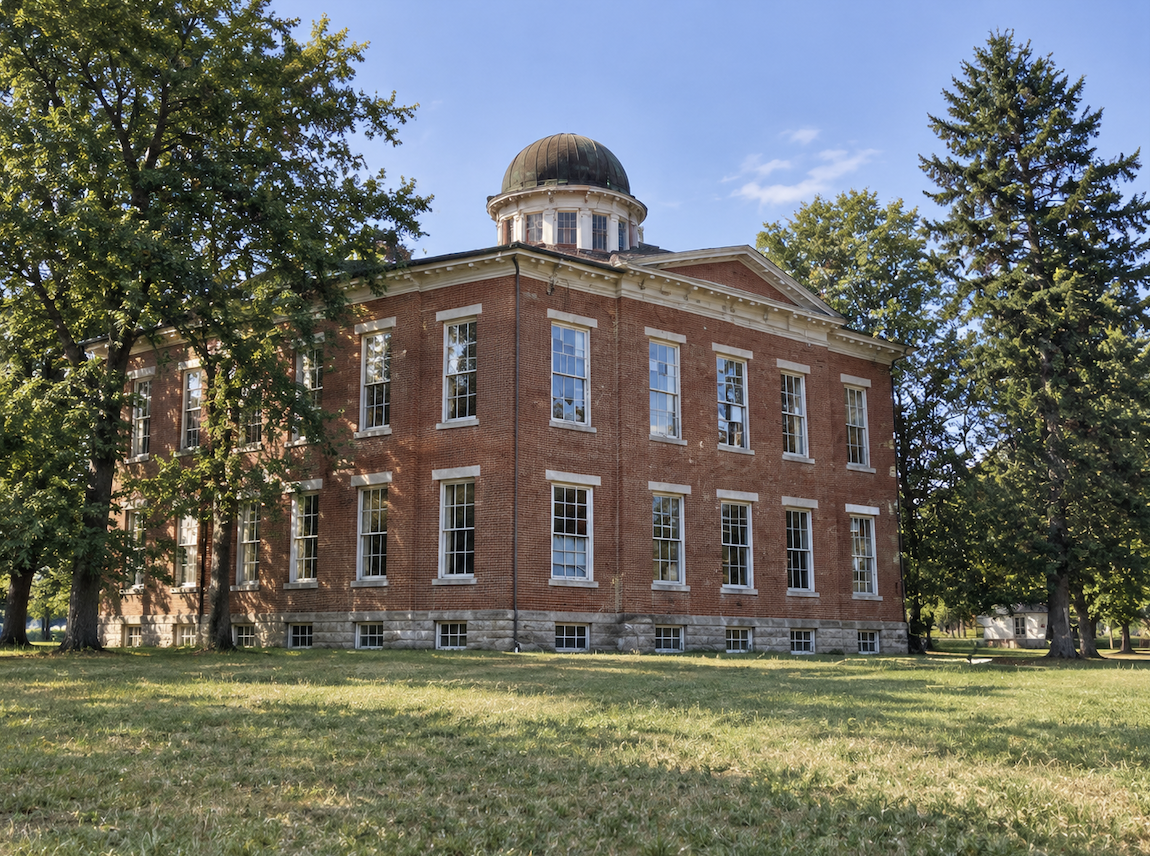
Smithville Normal Academy
Once children completed their basics in one-room schools, there was work on the farm or in small local businesses. The second industrial revolution offered factory work if one was willing to move to the cities. But for those who wanted to become doctors, lawyers, or other professionals there was a need for advanced studies. Several attempts were made to create a subscription school offering higher levels of study. Two hurdles had to be overcome. First, there was the issue of finding students who could afford to pay the tuition. Second, was the challenge of identifying a suitable location and a headmaster to provide instruction.
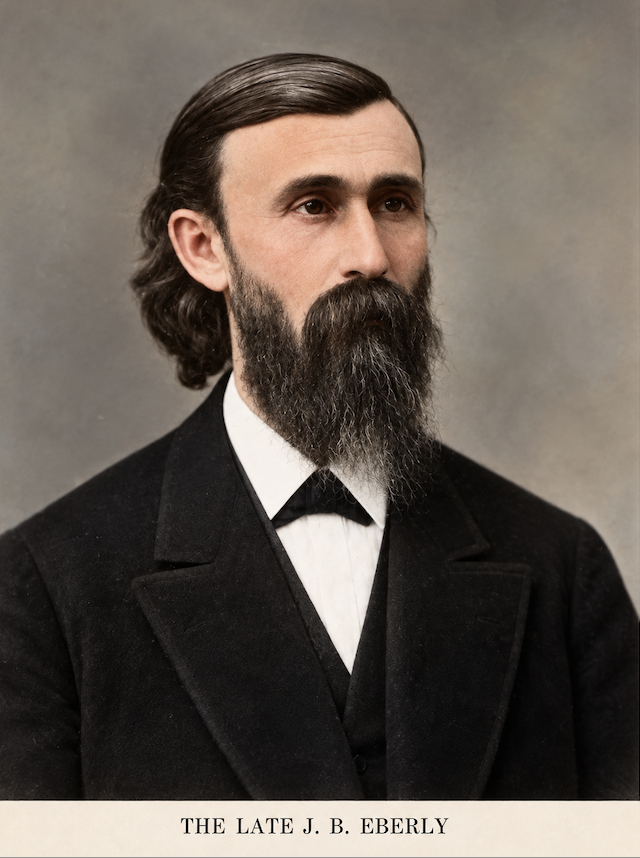
John Eberly
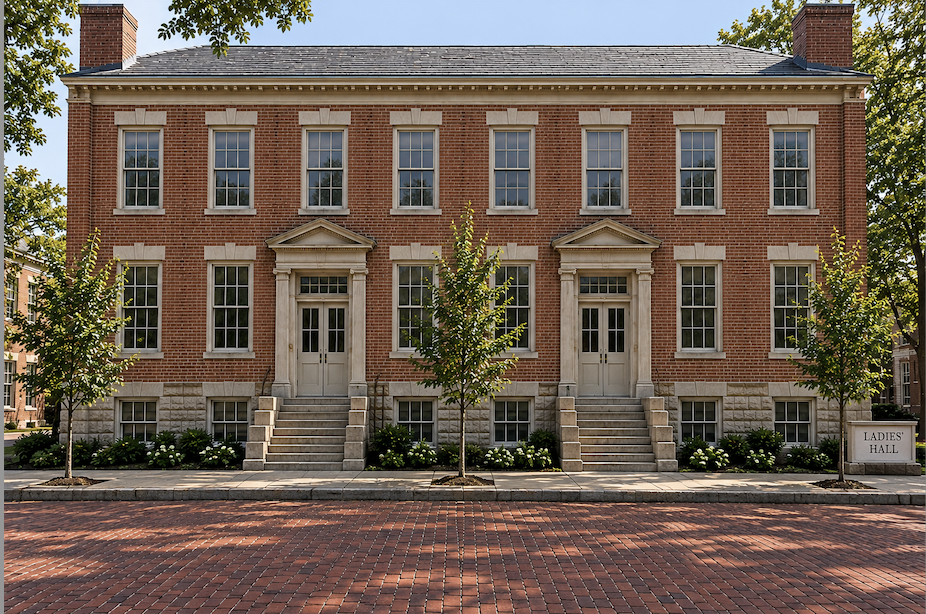
Success was achieved when a Mount Union College graduate by the name of Professor John Eberly offered to teach students in an old synagogue building located in the center of the village. Enrollment swelled leading to the construction of a new academy building along with Ladies Hall for female students to reside. Eberly served as headmaster, winning the respect and admiration of many graduates over the succeeding years. The Smithville High Academy attracted students from parts of Ohio, Indiana, and Pennsylvania. And it was a catalyst for growth in businesses as the population of the town swelled, causing the construction of hotels and restaurants to serve families of students. Ladies Hall was built on Main Street to provide female students a place to reside. Male students were housed with families willing to take on boarders.
-
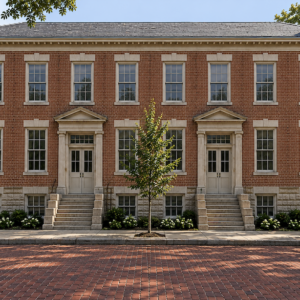
- Ladies Hall
-
- Smithville Normal Academy
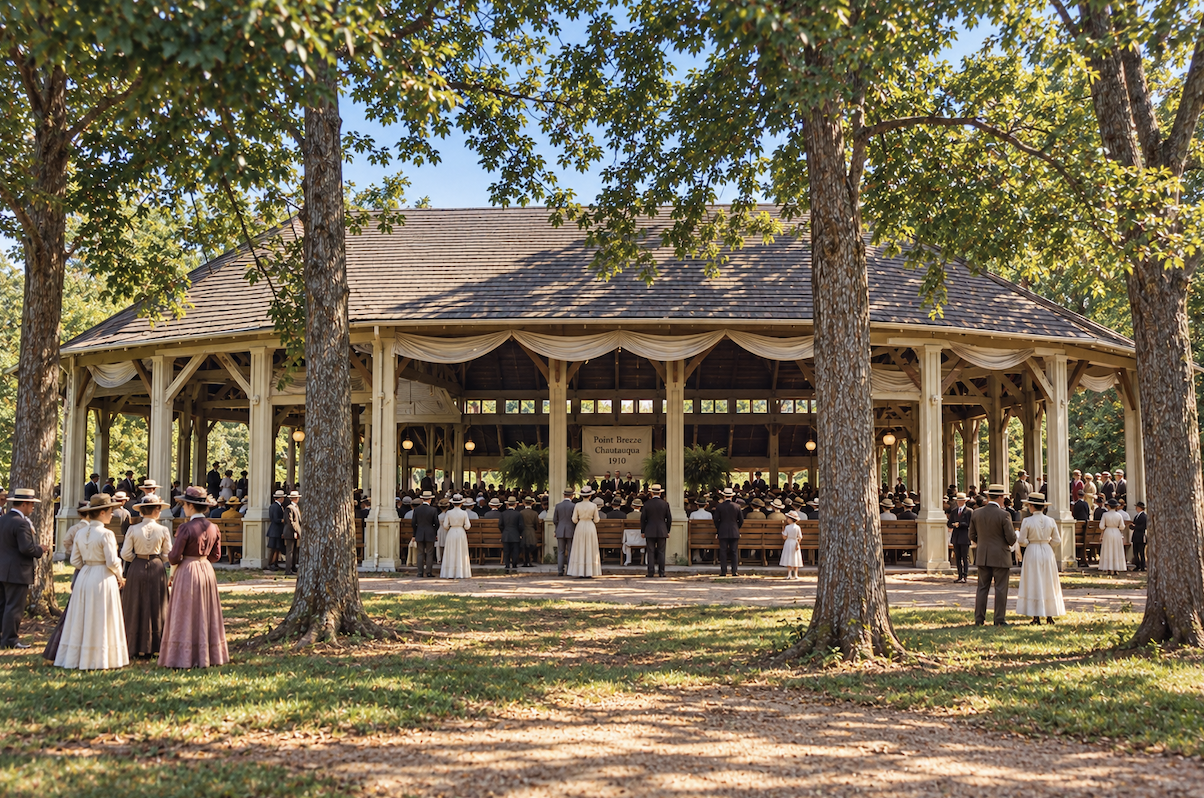
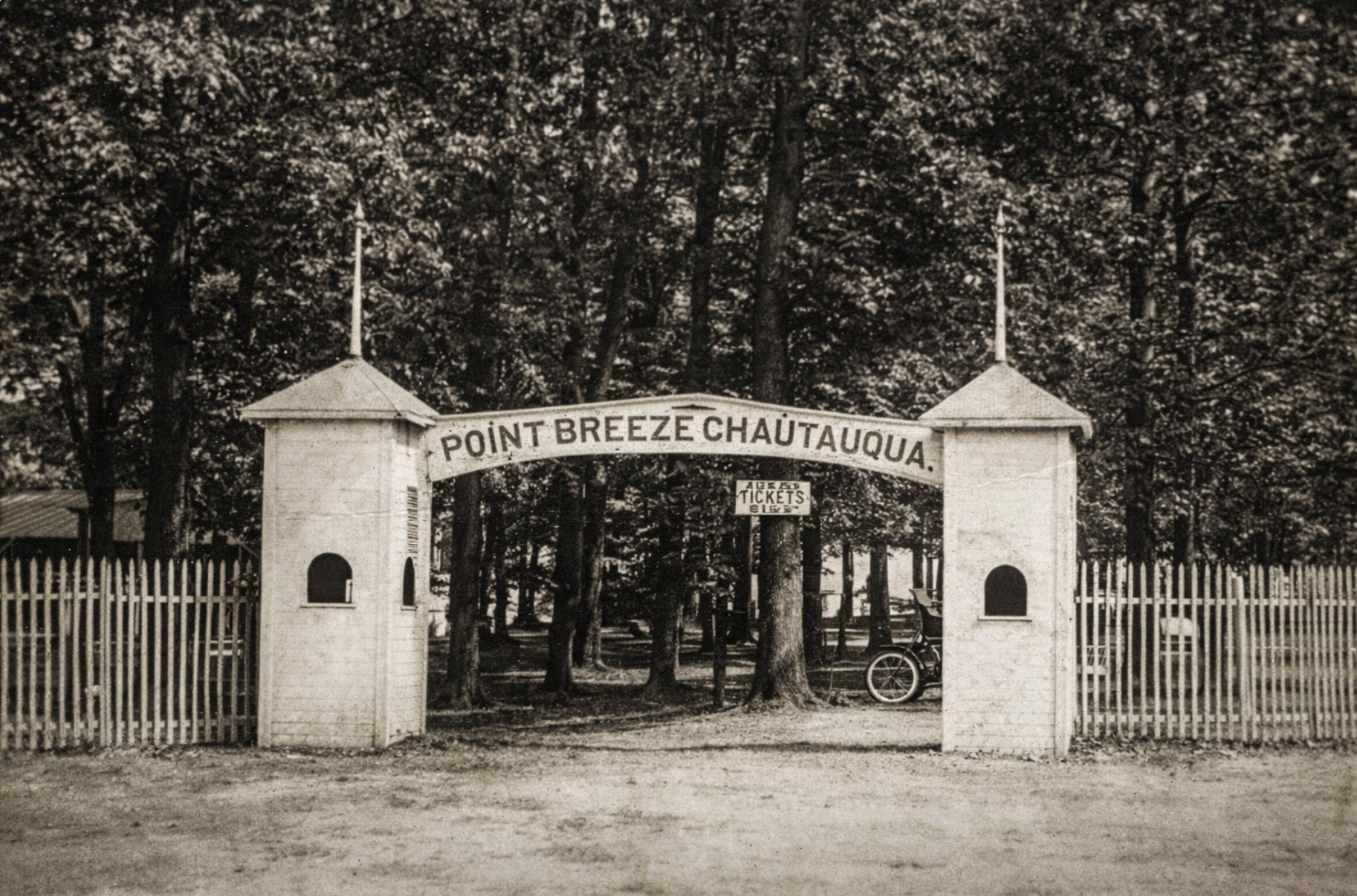
Point Breeze Chautauqua
In retirement, Eberly made a trip to Lake Chautauqua, New York to learn more about a movement he eventually wanted to bring back home. There was a thirst for self-improvement outside of formal schools. Adults wanted access to lectures, music and cultural experiences. Originating in Chautauqua Lake, New York, the movement combined elements of the Lyceum lecture movement with religious camp meetings.
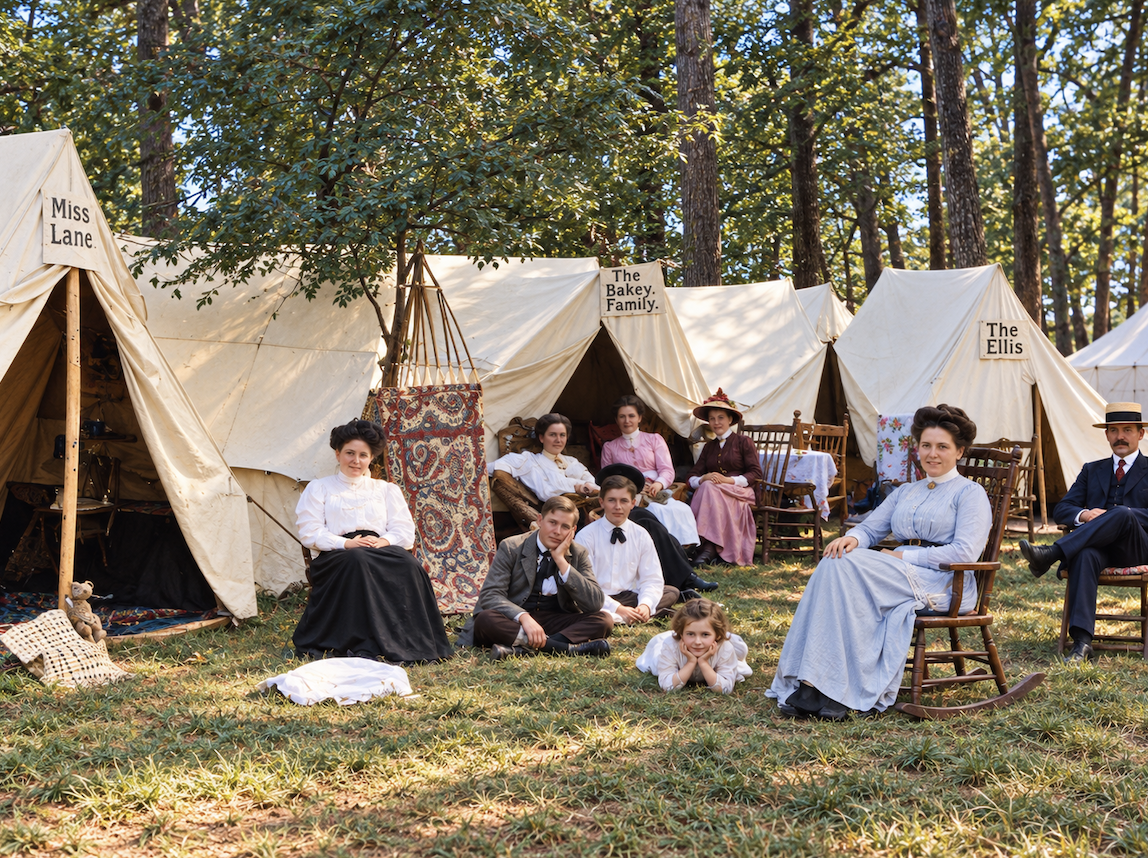
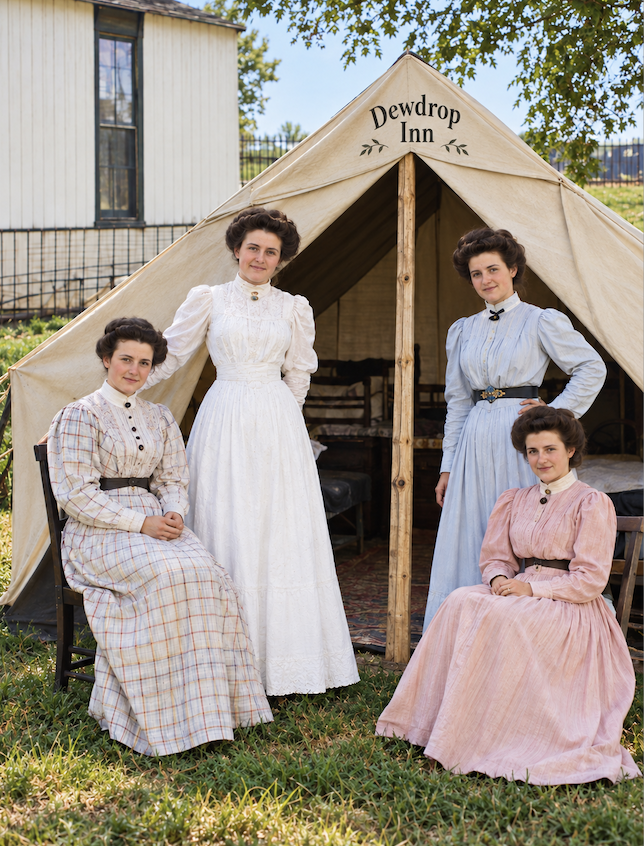
Eberly owned land on North Mill Street on the edge of town. The property included an upper and lower grove of trees, with a stretch of Sugar Creek running into the lower valley. The first season of Point Breeze opened in August of 1899. Out of town guests set up tents, brought furniture, bedding and other comforts of home. Some people even put up signs naming their temporary residences. Sundays included formal church services followed by baseball games and picnics. Famous lecturers on the nationwide Chautauqua circuit such as William Jennings Bryan and baseball legend CY Young were among the many who traveled to Point Breeze.
Soon there were travelers from all over Ohio, and neighboring states arriving by train. A formal dining hall was added along with an outdoor auditorium. The season expanded to 16 days to include two weekends. On a typical Sunday nearly 2000 buggies and autos filled the parking areas. But all good things eventually give way to something better. As more people purchased autos and highways allowed travel to new destinations, the movement diminished and Point Breeze closed down after a final season in 1915.
Women’s Right to Vote
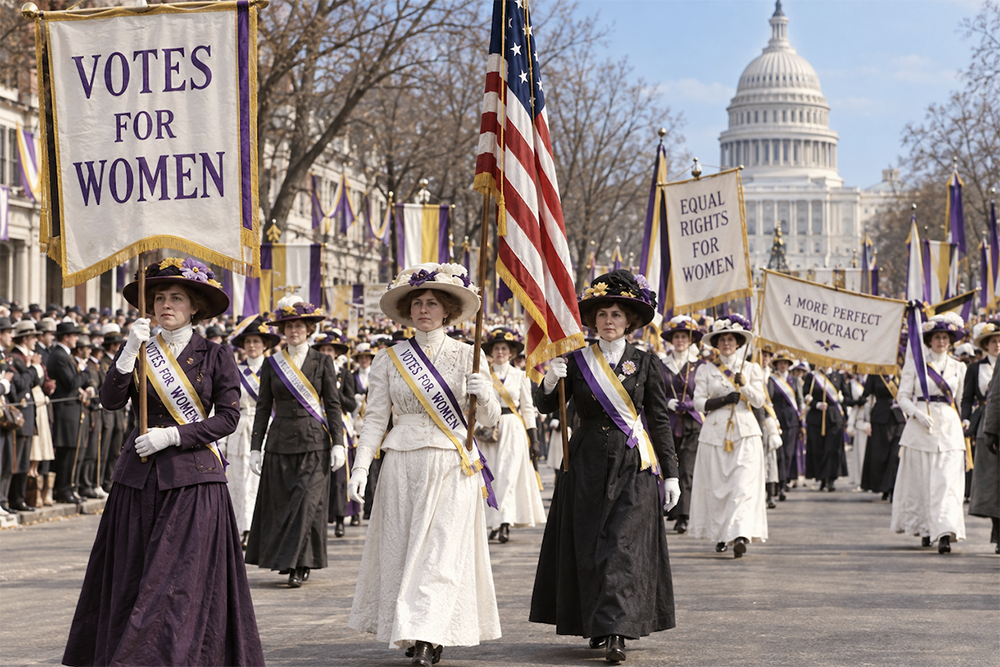
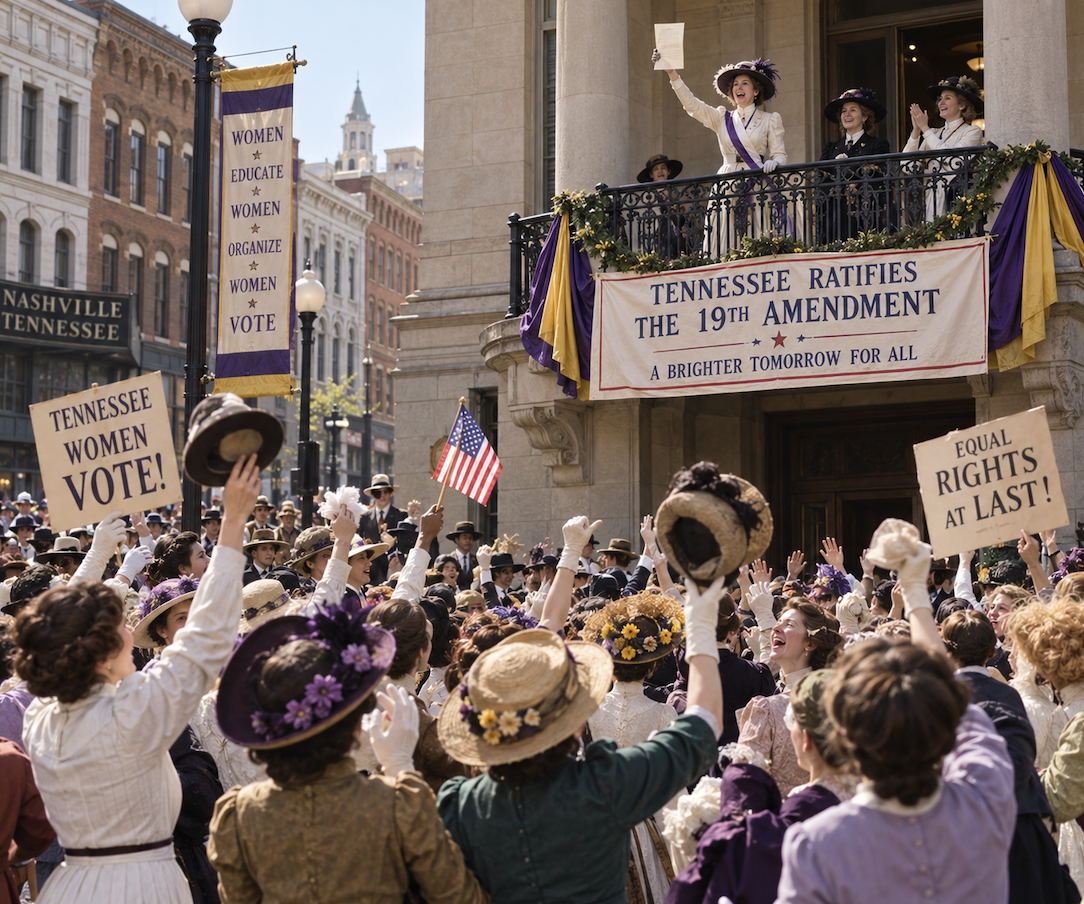
Women were not provided with the right to vote in the original U.S. Constitution and deferred this to the states to decide. Society followed English common law which cited a woman’s identity was via her father or husband upon marriage. Women could not own land, enter into contracts or own money even if employed. The evolution of women’s rights will engage my characters in protests, the famous March on Washington the day before Woodrow Wilson’s inauguration, and the eventual passage of the 19th Amendment. Daughters and friends of the Crites family will be in Tennessee to witness the state legislature be the 36th to ratify and solidify passage of the amendment. But it will not happen without costs as protesters were beaten, jailed and abused throughout the years of the struggle.
World War I
Historians refer to WW1 as one of the deadliest as it was the first time that wars could be fought from a distance using new technologies such as machine guns, gas, long range missiles, airplanes, and tanks. Part III will follow Rory and the Scottish Black Watch into battle. And volunteer nurses on both sides of the conflict will secretly participate in elaborate spy rings.
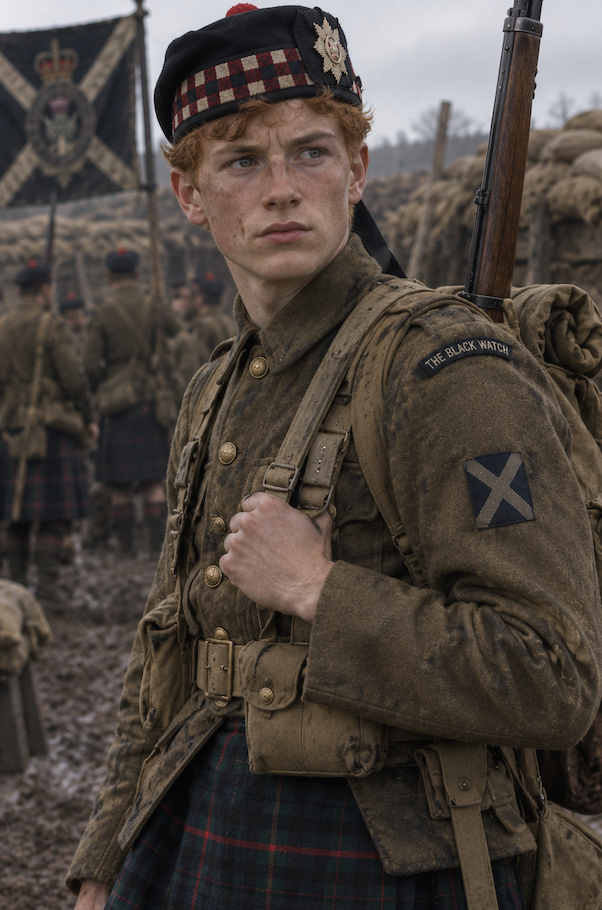
Rory
Nurses as Spies
Meet Jeanette, daughter of an affluent family who will persuade her parents to allow her volunteer as a nurse, and eventually become the leader of an international spy ring that provides critical information for the allied forces.
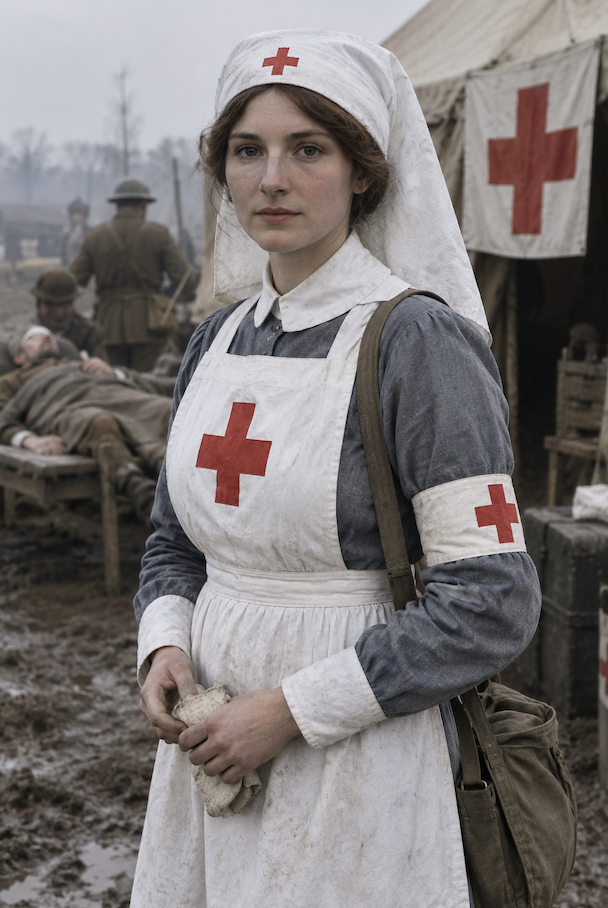
Jeanette
Spying was dangerous business and getting caught was quite risky. Such was the case of nurse Edith Cavell who treated soldiers from both sides in German occupied Belgium. She helped over 200 Allied soldiers escape only to be arrested, court-martialed and sentenced to death. In spite of international requests to spare her life, she was put to death by a German firing squad in October of 1915. On the evening before her execution she was to have said, “Patriotism is not enough. I must have no hatred or bitterness towards anyone.” Every October 12 she is commemorated by the Church of England.
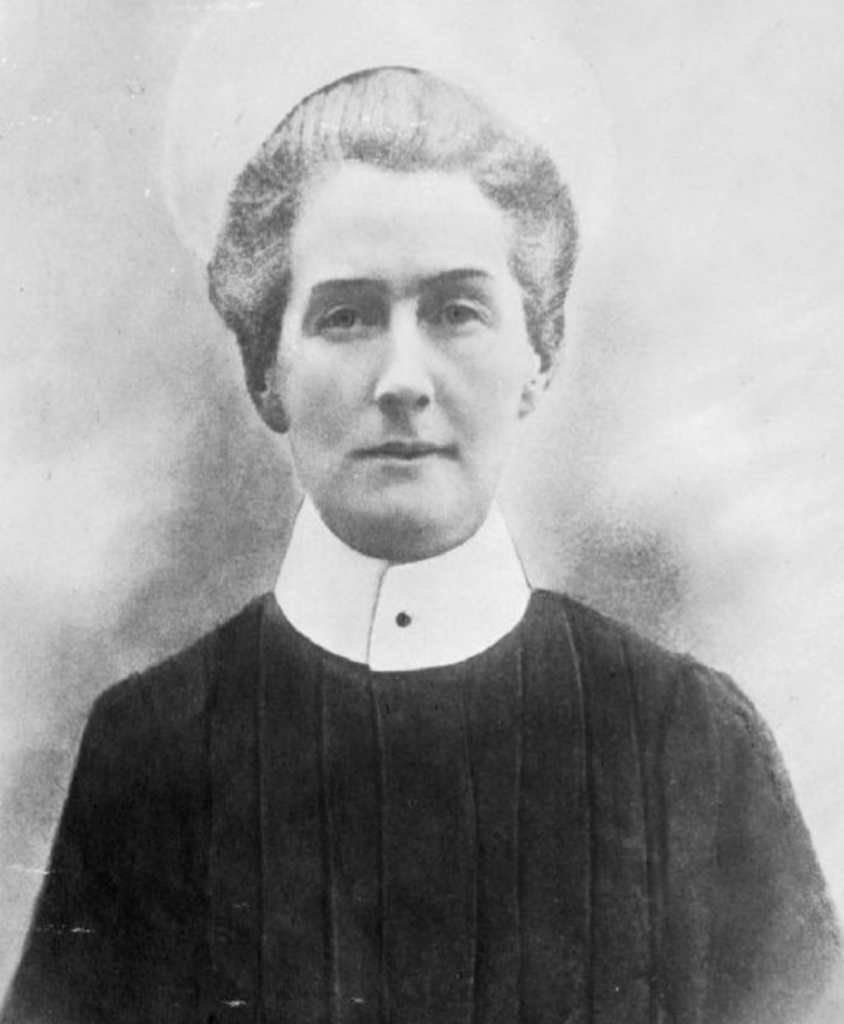
Edith Cavell
A Solider and a Nurse
There are many love stories that began when young nurses tended to the wounded. In WW1, volunteer nurses worked in multiple settings under very dangerous and challenging conditions. Volunteer nurses had minimal training and faced the horrors of war, treating soldiers who were badly wounded, many needing amputations. Recorded interviews reveal the enormous effort of nurses to provide comfort to the wounded and dying.
When one was wounded in battle, a minor wound could be treated with dressings every soldier carried. The more seriously wounded would be carried off the battlefield and trenches by stretcher bearers.
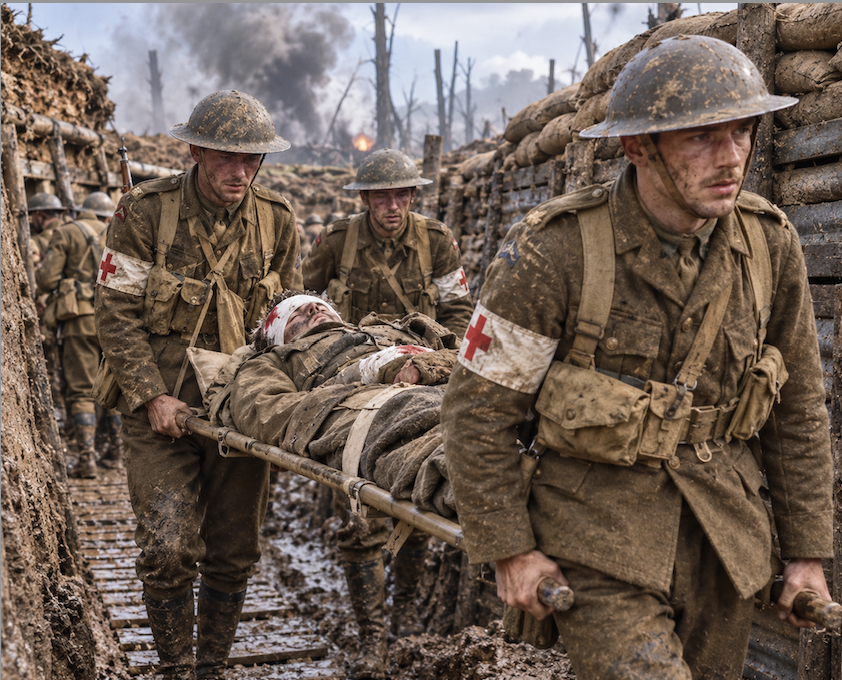
Stretcher Bearers in trench
Regimental Aide Posts: stations were positioned directly behind the trenches to provide emergency first-aid to those delivered by the stretcher bearers. Doctors stopped bleeding, applied dressings and when available, provided morphine and tetanus shots.
Advanced Dressing Stations: were situated hundreds of yards away. Teams of medical personnel evaluated the severity of wounds and utilized Field Ambulances to transport those in need of life-saving surgery to Clearing Stations.
Casualty Clearing Stations: were located miles away to provide trauma treatment and surgery in full scale surgical centers. Surgeons conducted life-saving operations.
Base Hospitals: were located back home or far away from the front to provide long-term recovery and operations for those requiring specialized surgery.
Throughout the treatment of the wounded, men sought the comfort of someone who would have taken care of them back in their home setting, typically their mother. Nurses understood this and through their compassionate caring, romances ensued. Such was the case of Rory and Olivia, an unlikely pairing.
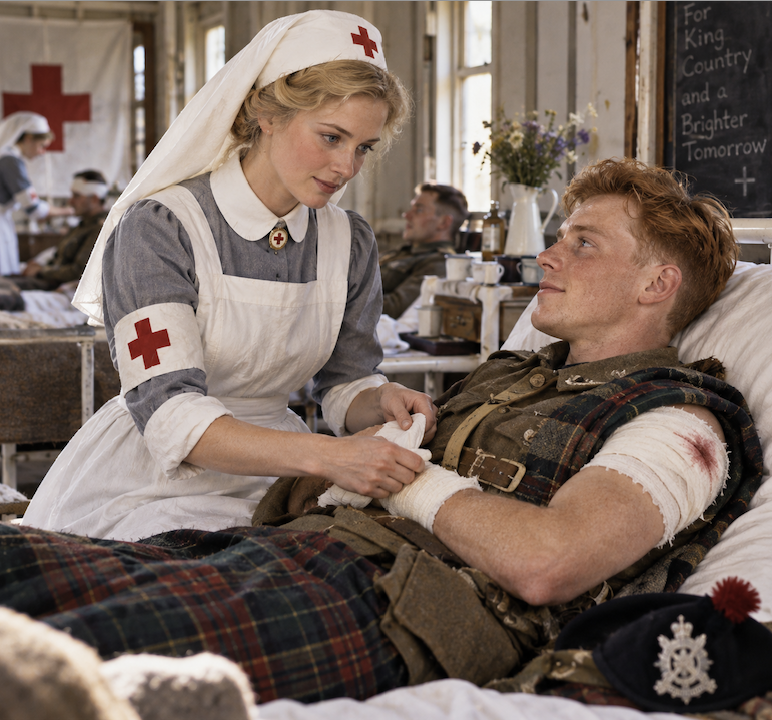
Olivia and Rory
Jim Crow
Jim Crow refers to laws enacted by Southern United States between the late 19th century and mid-20th century. The purpose was to disenfranchise African Americans and create enforced racial discrimination. At the center of this movement was Benjamin Ryan Tillman, Democratic Governor of South Carolina and later U.S. Senator. He was a white supremist who defended lynching and fought against civil rights for black Americans. He was nicknamed “Pitchfork Ben” due to his aggressive style of speaking, once threatening to use a pitchfork to poke President Grover Cleveland calling him a “bag of beef.”
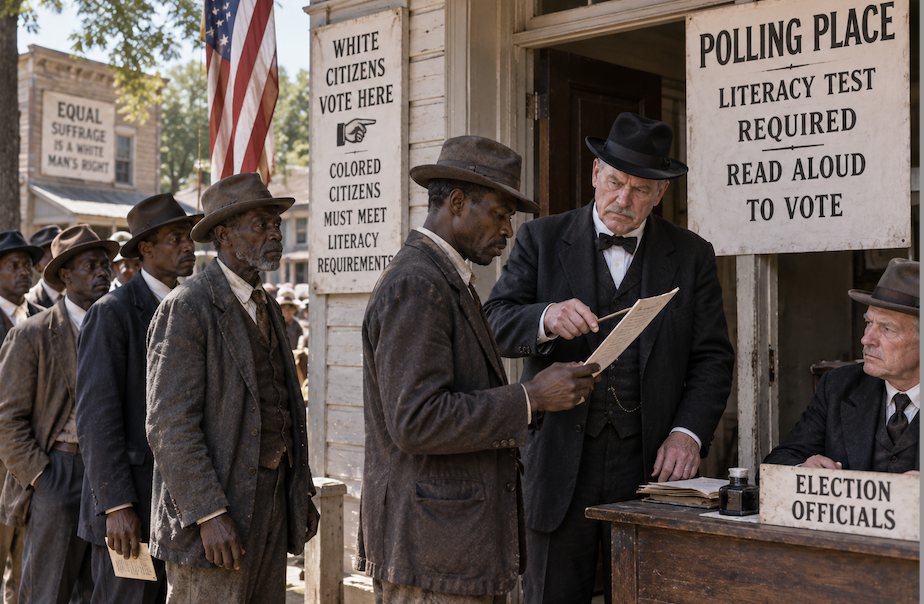
Polling Place
Tillman was a speaker on the Chautauqua circuit and made an appearance at Point Breeze, causing mixed reactions to his insistence that black men be kept from voting. He claimed that black men outnumbered white men in his state and could take over the government if permitted to cast ballots. He successfully introduced a poll tax to be paid six months in advance of an election, as well as a required literacy test for blacks to prove they could read. In Part I, Clatus Crites attends Tillman’s appearance and causes a commotion among the Point Breeze audience.
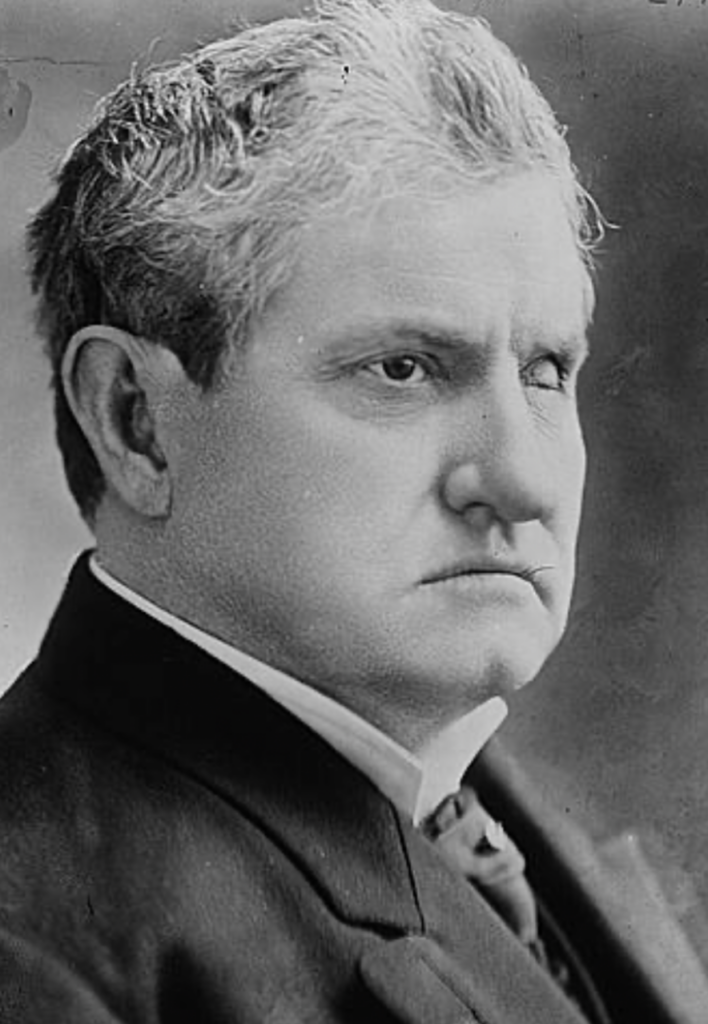
Benjamin Ryan Tillman
“Kill the Indian and Save the Man”
Captain Richard Henry Pratt
The Sad Story of Cultural Genocide
The plight of Native Americans as Europeans invaded their native grounds and forced tribes to move westward is a dark story in our nation’s history. In the upcoming prequel you will learn about Tashunko, a Shawnee boy who escapes his forced attendance in an industrial school for Lakotas to find his way back to Ohio to reconnect with the spirits of his ancestors who once lived there.
As the U.S. government used force to move tribes westward, there was the question of what to do with large populations of Indians confined to reservations without a means of practicing their way of life. The solution was to teach them how to live like white people.
A Civil War veteran of the Union Army, Captain Richard Pratt was assigned to be head of the Carlisle Indian Industrial School in 1879. Pratt thought that the best way to bring Indians into modern American culture was to eradicate their own.
The process to accomplish that was the unthinkable. Children as young as age five were removed from their parents and assigned to the school. Upon arrival, they would be stripped of their native identity by cutting their hair, clothing them in European style uniforms, assigning them traditional English names and forbidding them to speak in their native tongues. They were forced to eat food that was unfamiliar. Children who resisted were first beaten. If that did not bring about the required change meals would be withheld. Forced labor was used to teach them to accept the culture of white people. Many children perished from starvation, malnutrition and extreme physical punishment. Several died from diseases common to white populations. Others ran away and were hunted down. And a few escaped and found their way back to family.
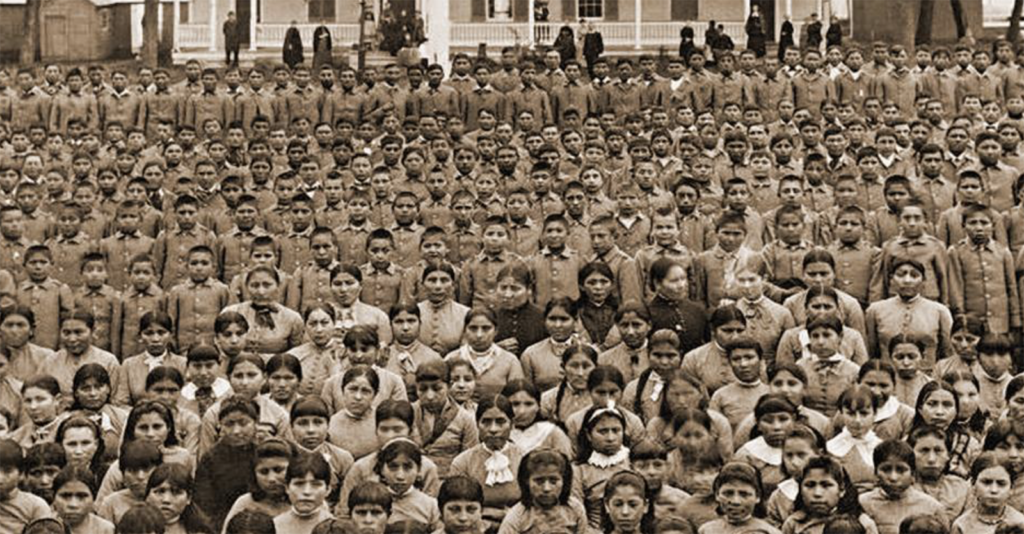
Children of the Carlisle Indian Industrial School
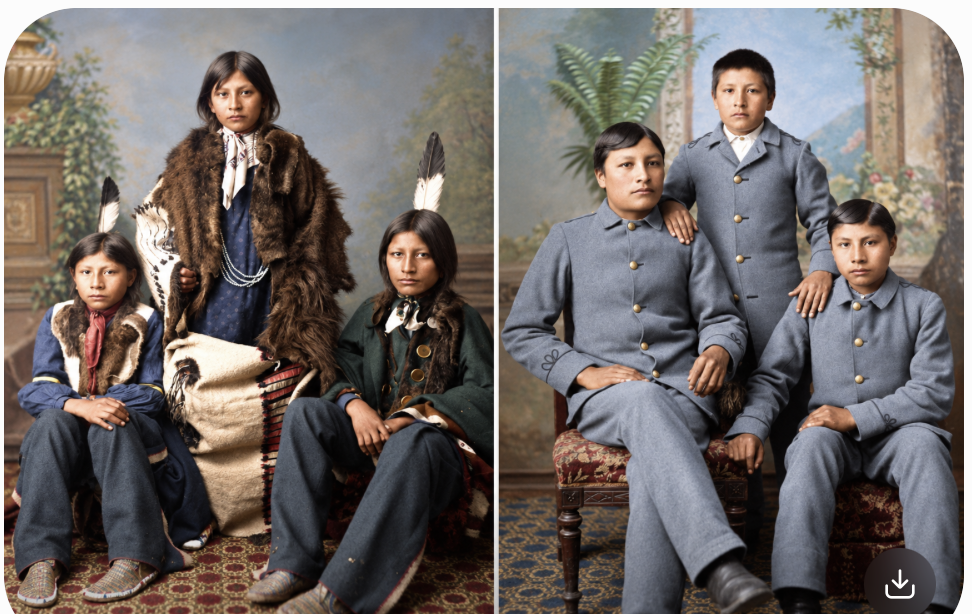
The Before/After of Carlisle School
In the Next Newsletter…
As you can see, many events and changes occurred in the transformation of America post-civil war through the Crash of 1929. In the next newsletter I will share more pieces of the novel including the evolution of jazz, the impact of Prohibition, the Teapot Dome Scandal and the power of large companies that set the stage for the collapse of Wall Street and the Great Depression. For now, back to the writing! Enjoy the fall weather!
Can You Speak Turn of the Century Slang?
(19th to 20th)
The prequel to South on Summit will include slang words that made their way into the transition years from the Gilded Age to the Industrial Revolution. Try a few of these in your conversation and wait for the reaction…
Wisenheimer – someone who thinks they are smarter than anyone else
Flat Tire – an uninteresting person who ruins the fun of a gathering
Cheaters – eyeglasses
Copacetic – an adjective stating that everything is going to plan
All Wet – an idea that is mistaken or incorrect
Heebie-jebbies – a state of the jitters
Glad rags – one’s finest clothes
Duck Soup – something that is easy to do
More advanced pieces of the novel coming in the next newsletter!
Don’t forget to post a short review of South on Summit on Amazon!
Send me your comments and/or questions!
More Reader Questions from South on Summit
One of the challenges of writing historical fiction is to place characters into a context that represents the values, sentiments, language, and culture of the historical times being presented. This requires a great deal of investment in the research of historical events as well as examination of human responses. My work blends fiction into history with the goal of causing the reader to question which is which. I use historians to check the historical accuracy of my writing and editors to judge the rest. Your questions are natural and rewarding, allowing me to address your curiosity. So keep them coming!
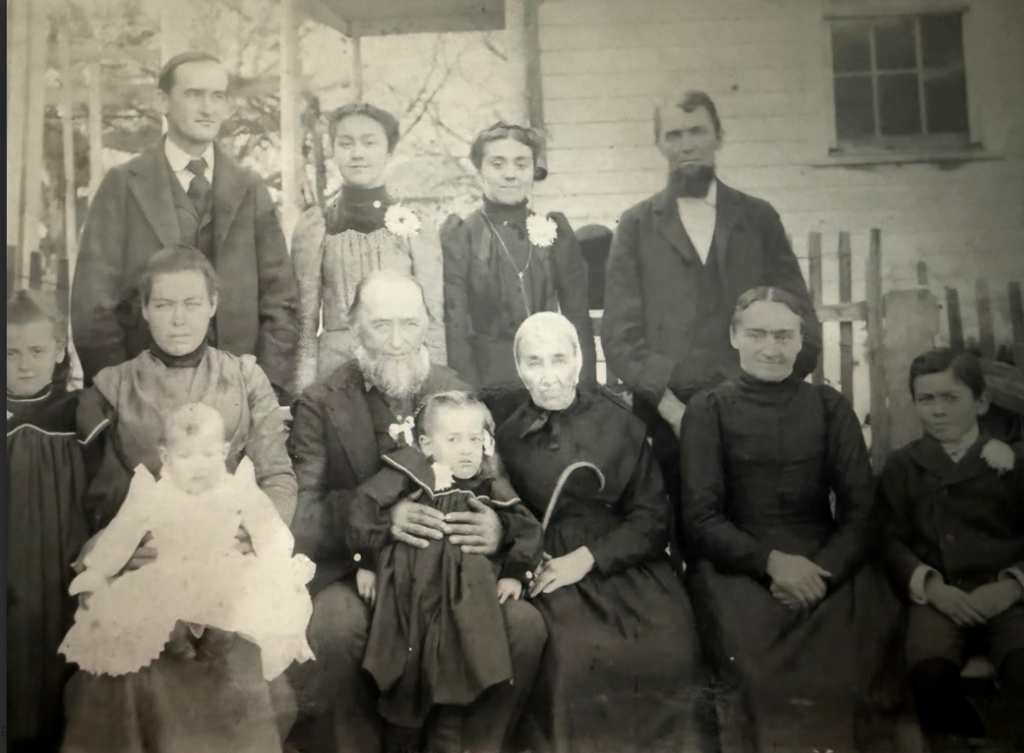
Grandmother Fanny Wittmer
In Part I Mary Lou frequently seeks advice from her Father Alvin’s Mother, Fanny. Was she a real person or character you made up?
Yes, she was as real as the descriptions and wisdom portrayed in the book. She was Fannie Plank Schrock, born in 1857 and as stated in the novel, passed away on February 28, 1942. My mother, as well as her siblings spoke highly of her as a warm and loving human being who looked at the joys and blessings of life. But was also very wise to the world. She was fun.
In the picture below, she is seated on the far right with her son, Alvin Schrock and her husband David is standing behind them.
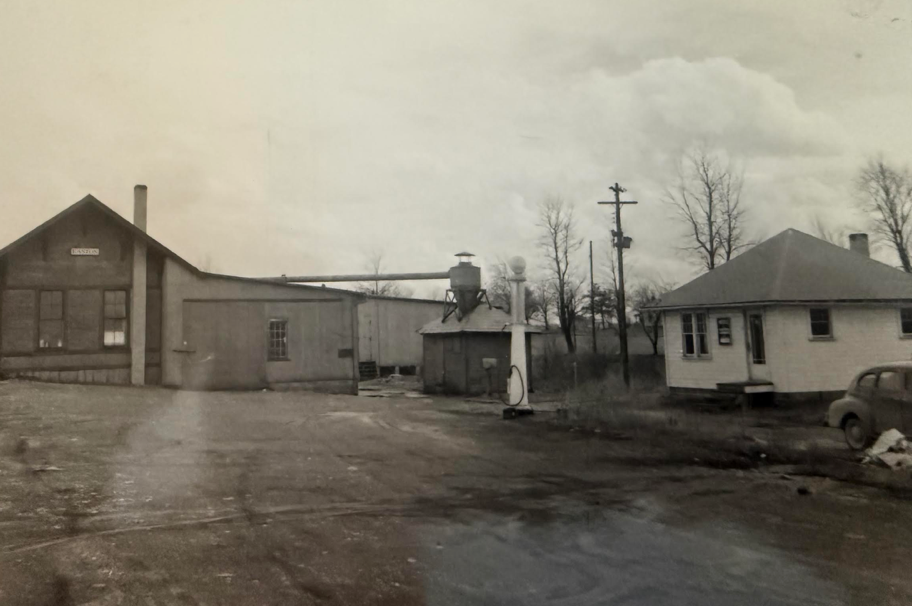
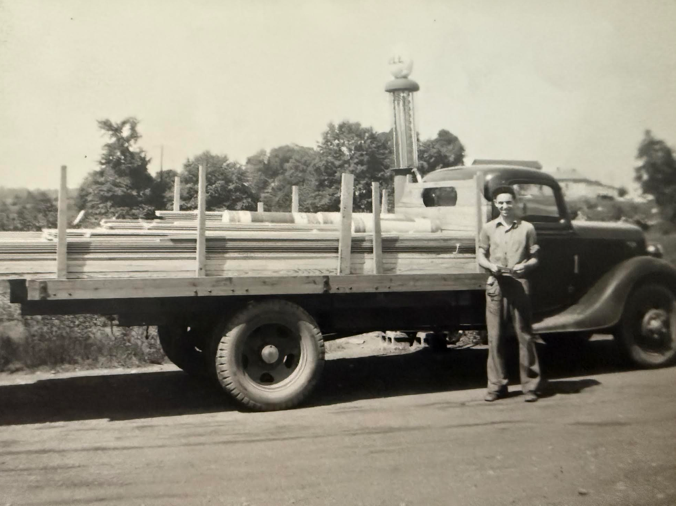
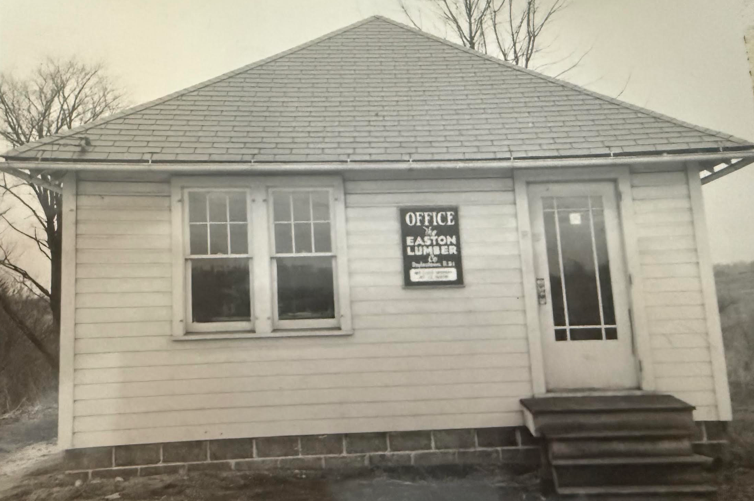
Easton Lumber Company
When Bill leaves for the Army, he is assigned to the infantry, but when they discover he ran the business office for the family lumber company, he was reassigned to the position of company clerk to run the medical supply depot in Naples. Was there and is there an Easton Lumber Company?
Yes again. It was a start up lumber yard that supplied materials for housing construction in Easton, Ohio, a small community adjacent to Doylestown, Ohio. Below are pictures of the initial buildings along with one of Bill. In the early years the railroad cars that were delivered to the yard had to be unloaded by hand. Later on, tow motors were used. The business still exists today under the name of Galehouse Lumber.
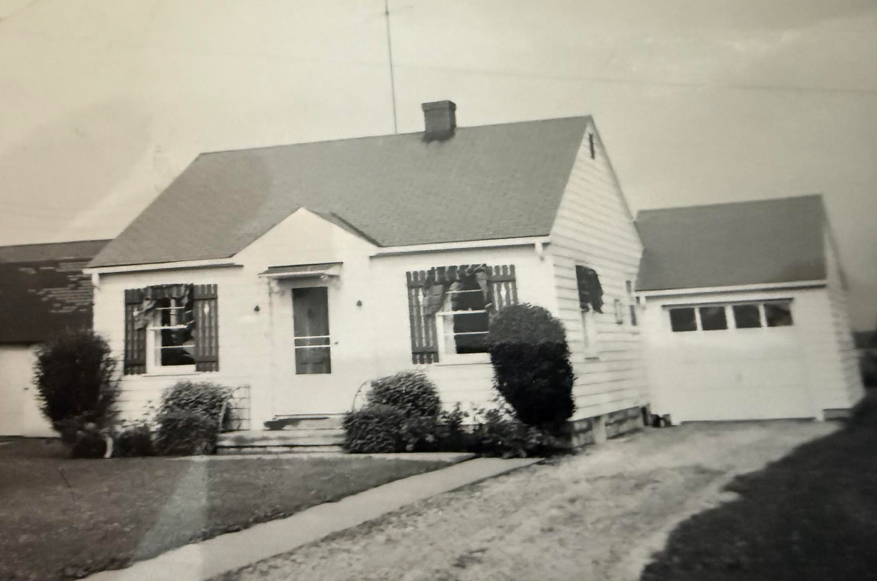
Bill and Mary Lou’s First House
Was their first home really on South Summit and was it built by Easton Lumber?
Yes, below is a picture of the house that remains on South Summit. Later on they built an addition to the rear of the house before deciding to find a larger home further down the street. Here is a picture of their first house from the time period after the war.
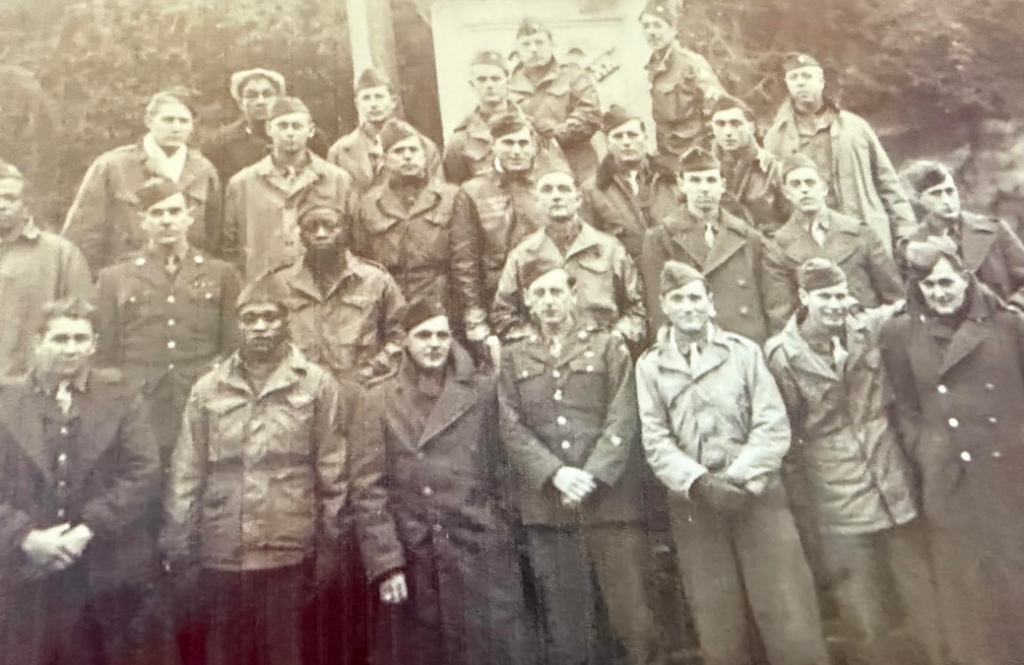
Taking Leave from War
Bill only took two leaves while gone from home for a thousand days, correct?
The first was in Rome with a number of random servicemen as shown in the picture below. He’s in the second row third from the right.
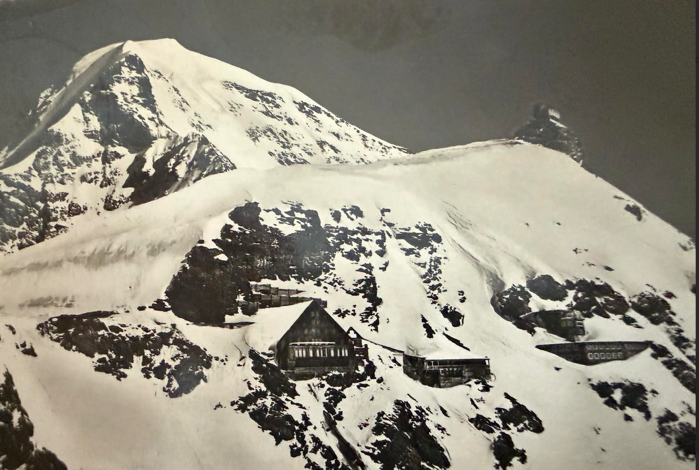
The second was after Germany surrendered and he was given a choice to take a week in Rome, Switzerland, or France. He had relatives in Wilderswil at the base of the Swiss Alps.
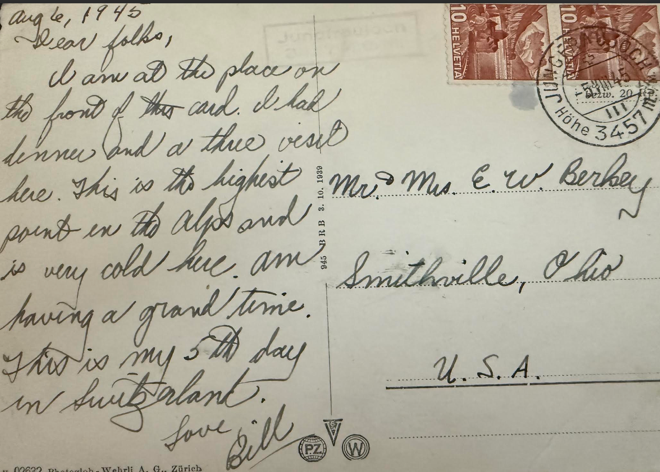
Postcard
Here is a postcard he sent his parents in August of 1945, picturing the Jungfraujoch.
Readers post raving reviews of South on Summit
Amazon Customers
“Allowing the reader to be guided by three different characters voices throughout the book made this an engaging page turner.”
“This book tells of wartime, of the Depression, and of familiar places where communities came together.”
“Engrossing story, well written.”
“Tim’s book is well written and very interesting.”
“What a treat it was to read this book! The author artfully blends the joys and sorrows experienced by three people who called Smithville, Ohio, home. The narrative provides wonderful detail about life during the 1930s and 1940s. Well-paced, nostalgic. With Christmas just around the corner, buy a copy for the book- or history-lover in your life!”
“Beautifully written. The author has captured the era perfectly in a flowing narrative along with exceptional dialogue and storyline. Great read for anyone interested in the 40’s time period.”
“South on Summit is a very well-written novel. I enjoyed reading it. I know the area and recognize several names. According to the stories I heard from my parents, the description of life in the 1930s and 1940s was very accurate.”
“Humor, romance, and sorrows keep the reader’s attention. The war stories are heartbreaking and eye-opening sorrow.”
“Tim Berkey has artfully captured a small town and an era in a way reminiscent of Norman Rockwell. An engaging read to be sure.”
“South on Summit is a delightful and sometimes sobering read as the multiple story lines unfold. I smiled and recognized the descriptions of childhood freedom that small town America enjoyed in the first half of the 20th century. Tim Berkey’s character development is so engaging and the historical depictions and challenges of WWII are detailed and eye-opening! I recommend this book for lovers of historical fiction.”
Goodreads
“South on Summit is a captivating novel that weaves together multiple storylines, each with historical context, compelling characters, and an exploration of life during World War II balancing moments of childhood innocence and freedom with the harsh realities of a world at war.
The novel’s depiction of small-town America is particularly nostalgic, evoking a simpler time. It’s a heartfelt reminder of a world that feels both distant and familiar.
The historical elements of the novel provide a vivid portrayal of the challenges faced during WWII, not just on the battlefront but also at home, as families and communities navigate the sacrifices and uncertainties of the war.
For historical fiction enthusiasts, South on Summit is a book that will make you smile, reflect, and perhaps shed a tear as you journey through a tumultuous yet transformative period in history.”
Post Your Review!
People who read historical novels are always searching for their next book. Some go to Amazon and read reviews while others reach out to a major site called Good Reads where both authors and readers connect. Several of my readers of South on Summit have posted short reviews on Amazon. This is rather easy to do and only takes a minute or so. It’s the same process as you would use in rating and reviewing any product offered on their website. Here is the link for South on Summit: Amazon –
Scroll down to: Review this product where you can read other reviews and write your own!
GoodReads
Goodreads.com is a wonderful site for readers as well as authors. Many readers use it to find the next book in their favorite genre. Membership is free. Once you join you can search for current books and read the reviews posted by other readers. Just like Amazon, you can rate a book and post a short review.
Link to join Goodreads: https://www.goodreads.com/user/sign_up.
Then enter “South on Summit” in the search box and it will take you here:
https://www.goodreads.com/book/show/220446504-south-on-summit?ac=1&from_search=true&qid=u9B7e8IVTA&rank=1
Scroll down to read reviews and then rate and write your own.
Thank you! Your kind effort will expose my book to more readers!